This blog post is based on our webinar presented by Jeff Wirtz, AnyLogic Program Support Specialist.
When people hear the term digital twin, they usually think of physical systems.
Factories. Warehouses. Airports. Conveyor belts, forklifts, dashboards, etc. Those are exactly the kinds of systems AnyLogic is most often used to model.
Now let’s look at this from a different angle. Video games may be some of the clearest examples of behavior simulation, showing how people actually act inside complex systems.
One such case is a virtual pandemic that accidentally spread through World of Warcraft in 2005. Another is an ongoing, player-driven galactic war in Helldivers 2 that updates continuously based on player activity.
Both examples connect directly back to real business modeling, practical digital twins, and how simulation models can be delivered to decision-makers without relying on static reports.
Contents:
- What do we actually mean by simulation?
- Video games as simulation systems
- When simulation becomes a digital twin
- Why this matters beyond games?
- Making simulation accessible
- Build your own digital twin
- Final thoughts
What do we actually mean by simulation?
Most people already use models, even if they never think of them that way.
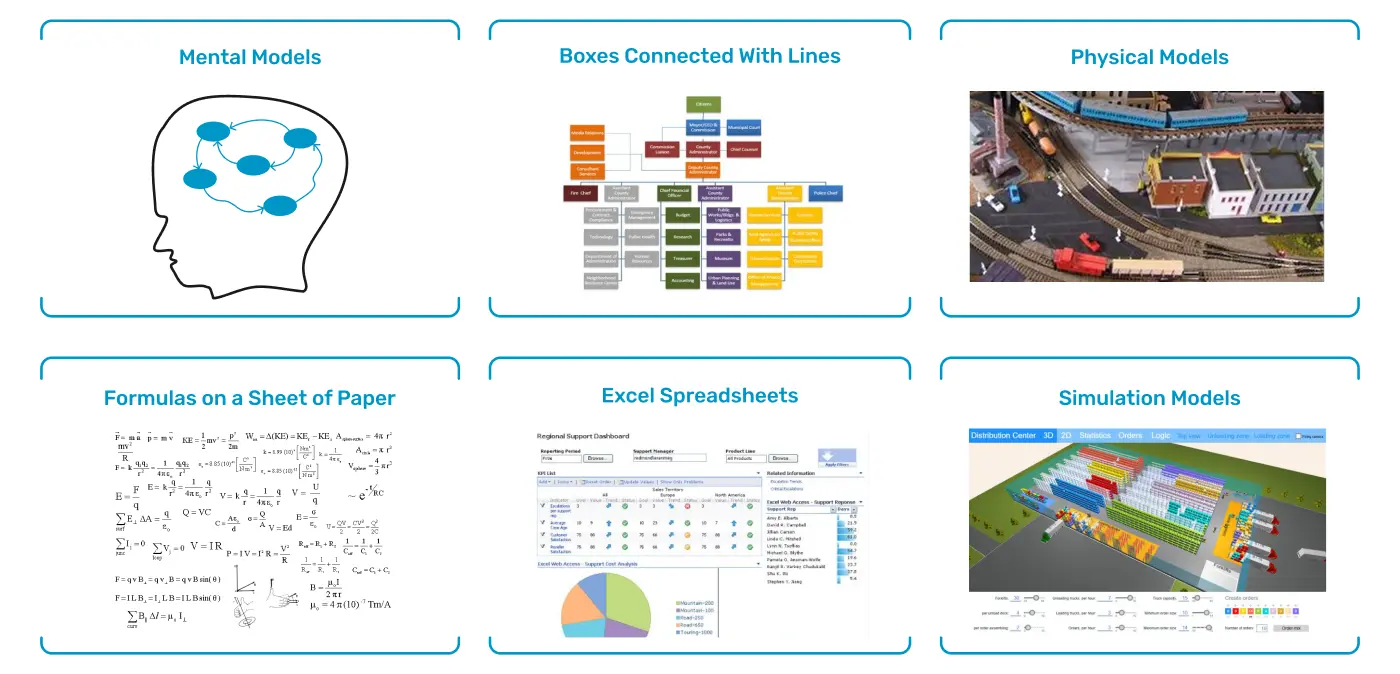
When planning a grocery trip, you form a mental picture of the steps you will take. When working through a process, you sketch boxes and arrows to organize your thinking. Spreadsheets are often used to test budgets or schedules, and formulas are adjusted to see how changes affect outcomes.
These are all models, but they are static. Simulation is different because the system evolves over time. That makes it especially useful for human behavior modeling, where people’s actions influence what happens next.
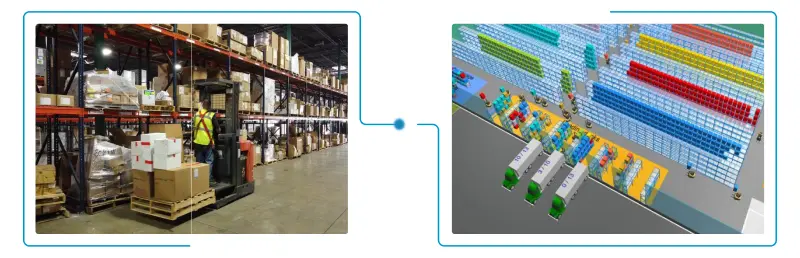
Entities move, interact, respond to events, and influence one another. This kind of behavior simulation makes it possible to ask practical what-if questions:
- Want to change staffing?
- Reroute trucks?
- Adjust schedules?
If you try it in real life, it can get expensive fast. In a simulation, you can explore scenarios safely and see what the results might look like before you commit.
Video games as simulation systems
Now here’s the twist. Video games have been doing this for decades. Yes, they are simulations too. They may look very different from factories or supply chains, but they are built around the same core concepts: rules, agents, flows, constraints, and feedback loops.
In that sense, large multiplayer games are living examples of behavior simulation, with thousands or millions of players interacting inside the same system.
By modeling game worlds with AnyLogic, we can demonstrate how simulation techniques apply to any complex system.
Game world #1: a virtual pandemic in World of Warcraft
If you were around for it, you probably remember the chaos. If you were not, imagine this:
A boss fight introduces a disease mechanic. It is designed to stay inside the dungeon. Players get infected, they spread it nearby, and the group has to react.
Simple enough.
But then certain players figured out they could bring the disease out of the boss room and into the main world. Into crowded cities. Into areas full of new players who had no chance of surviving. And suddenly, a game mechanic turned into a full-blown outbreak.
World of Warcraft – a massive multiplayer online role-playing video game. In 2005 it experienced an unintended virtual disease outbreak known as the Corrupted Blood incident.
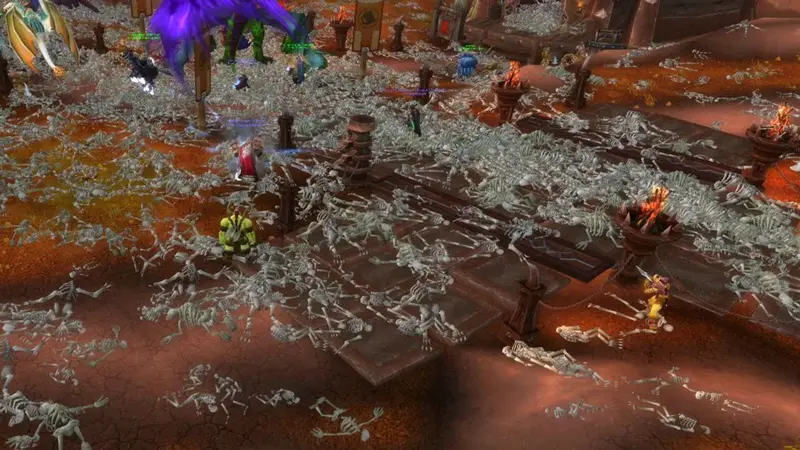
It was fascinating not only because it showed how the infection spread but also because it captured how people behaved.
- Many fled infected areas.
- Others clustered in familiar locations.
- Some tried to help and heal others.
- A few treated it like a joke.
- A small number intentionally spread the infection.
Panic kicked in, and normal routines broke down. The situation may sound similar to what happened in 2020 during the COVID-19 pandemic, but in this case the outbreak was entirely virtual. Even so, it became a widely cited example of how human behavior can reshape outbreak dynamics inside complex systems.
Read also: a real-world example of behavior simulation create smarter and adaptive systems and pandemic response.
Using AnyLogic, one of the game’s cities was recreated as a behavioral simulation model.
In this model, the city is broken into districts where players naturally gather. Think of the spots everyone knows: the bank, the central plaza, the auction house. Those are magnets. People drift there even if they do not have a strict reason. That clustering matters because disease loves crowds.
Then you give the world basic rules of motion. Agents walk around, avoid collisions, choose paths, get stuck in dense areas, and form believable crowd patterns. That layer is what makes the outbreak feel real, because the infection is driven by who gets close to whom.
Each character follows a simple disease progression framework: susceptible, exposed, infectious, recovered (SEIR). The key is that transmission happens through proximity in the environment. Walk close enough to someone infectious, and you might get it too.
Read also: Discover how multimethod SEIR(D) simulation enabled data-driven policy testing and healthcare capacity planning during COVID-19 in Saudi Arabia.
And then comes the part that made the Corrupted Blood incident so challenging.
NPC characters could carry and spread the infection without dying. They could become infected and keep transmitting, but they were not affected by the disease in the same way as player characters. That created a perfect storm: invisible spreaders who do not die.
What the simulation revealed:
- High-density hubs acted as transmission hotspots.
- Behavioral responses reshaped movement patterns.
- A small number of non-compliant agents had a large impact.
These are the same challenges seen in real-world systems where human behavior modeling is critical. Movement patterns, crowding, individual choices, and noncompliant behavior often shape outcomes more than technical constraints alone.
Game world #2: a living galactic war in Helldivers 2
The World of Warcraft example recreates a past event. But the Helldivers 2 example is different. It models a system that is actively evolving.
Helldivers 2 is a large-scale cooperative action game built around a persistent, galaxy-wide war. Thousands of players participate at the same time, completing missions on different planets as part of a single, evolving campaign. At its core, the game functions as a real-time behavior simulation, where collective player actions continuously reshape the state of the system.
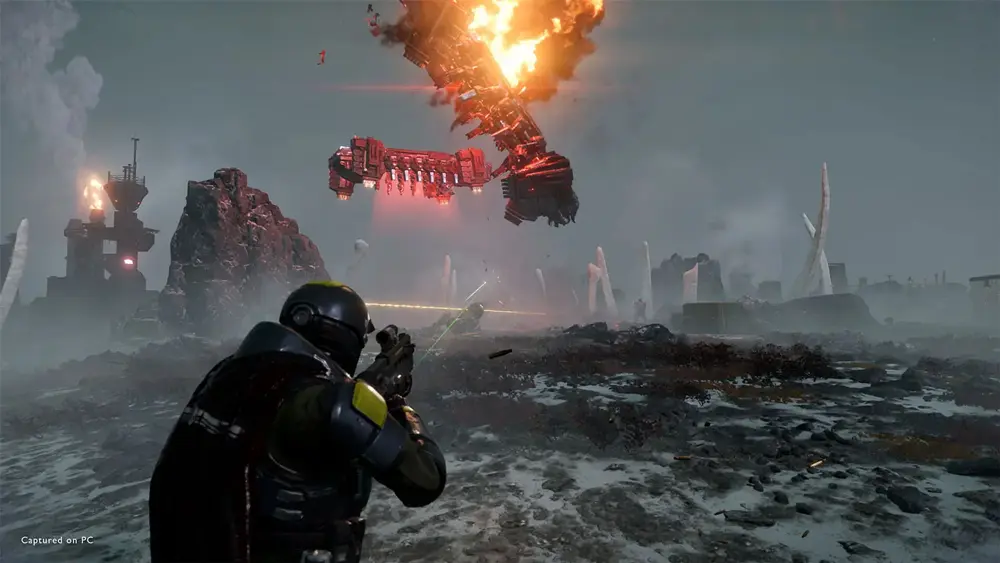
If you have played it, the experience is familiar: you log in, review major orders and contested planets, choose where to deploy, and run missions that directly affect progress. Over time, the galaxy map shifts based on collective player action.
That is not a scripted campaign. It is a persistent, player-driven system. From a modeling perspective, this raises familiar operational questions:
- How quickly does a planet change control when players concentrate their efforts?
- What happens if enemy pressure increases?
- Will major objectives be completed in time?
- How do changes in player population affect outcomes?
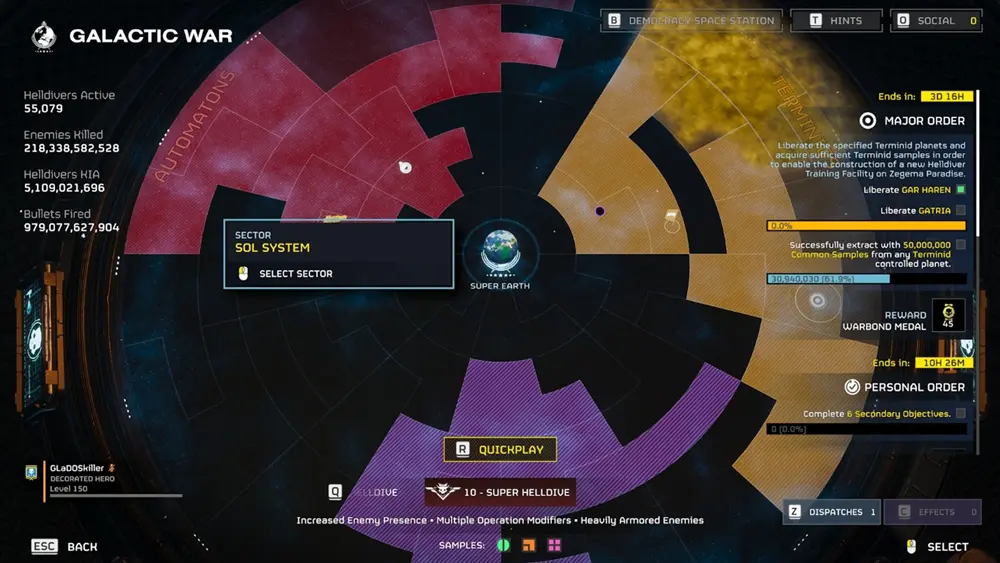
(Source: Arrowhead Game Studios/Sony Interactive Entertainment)
This is where behavior simulation gets fun, because you are not just explaining what is happening. You are exploring what comes next.
How do you model a galactic war without simulating every bullet?
You choose the right level of detail.
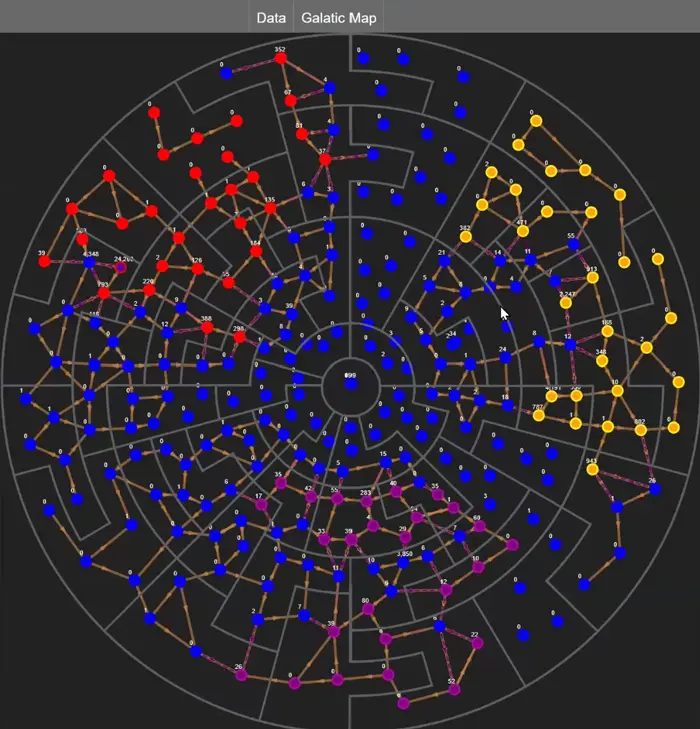
In this model, each planet tracks liberation as a continuous value that rises with player activity. When it hits 100%, ownership changes. That part is clean and perfect for a system dynamics approach, where you model progress as a flowing quantity over time.
Then you add the player behavior layer.
Players are agents. They move between planets based on priorities, urgency, and what other players are doing. Sometimes players swarm a planet that is almost done because it feels efficient. Sometimes they rush to defend a planet under pressure. That creates surges, lulls, and shifting front lines, turning the model into a clear example of human behavior modeling at scale.
And player population is not static. It changes throughout the day. The model can adjust those counts using external data trends so the simulation reflects how active the community tends to be at different times.
When simulation becomes a digital twin
This galactic war model goes beyond a standalone simulation.
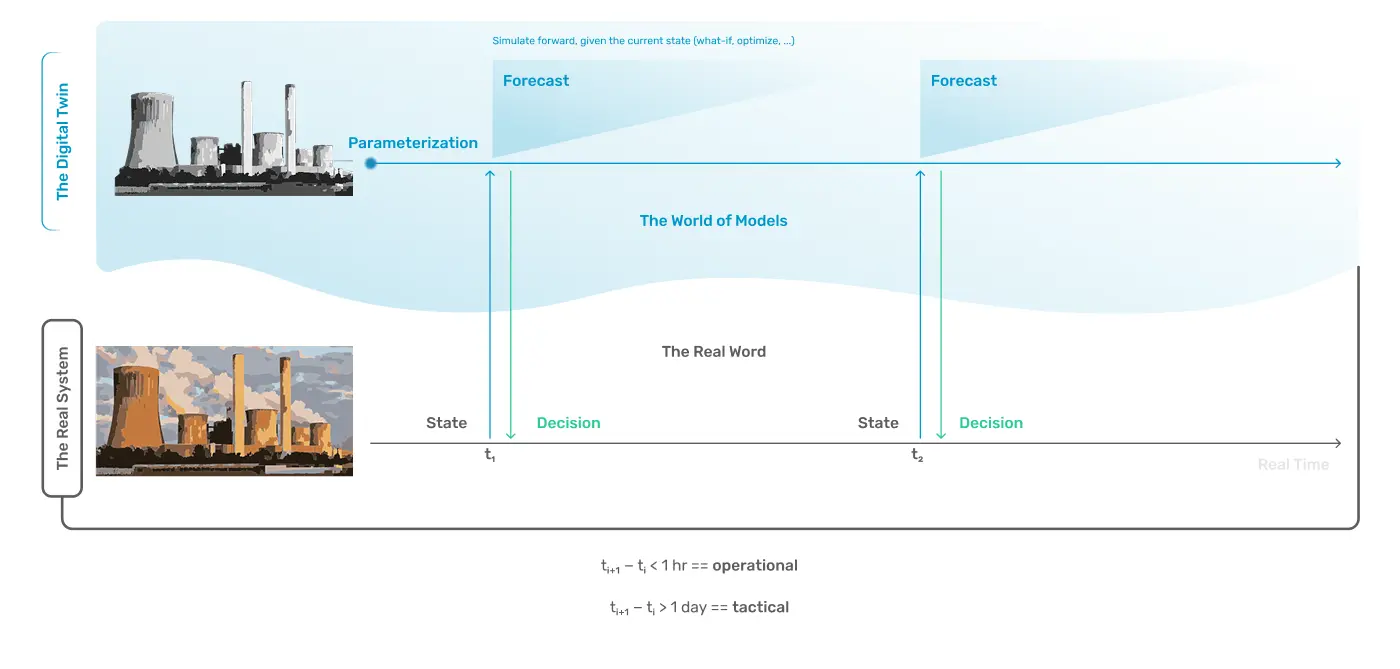
Live game-state data is ingested through publicly available JSON files, keeping the model synchronized with the current state of the war. From that updated state, the simulation can project future scenarios, turning player activity into a form of behavior simulation that evolves in real time.
This data-driven feedback loop is what defines a simulation-based digital twin:
- Live system state in.
- Simulation runs forward.
- Future outcomes and scenarios out.
The same structure applies to industrial digital twins. The real system changes, the model updates, and the behavior simulation helps reveal possible paths forward.
Cool, but does this matter outside games?
Yes, and games make it easier to see why.
Games are simplified worlds with rules you can observe. That makes them great training grounds for thinking about complex systems. They also act as large-scale behavior simulation environments, where many individual actions combine into visible system outcomes.
The same modeling approaches apply across real domains like:
- Manufacturing and warehouse operations.
- Supply chains and logistics.
- Transportation and passenger terminals.
- Healthcare and social systems.
- Energy, mining, and defense.
Also, games reinforce a lesson that business teams sometimes learn the hard way: the level of detail should match the question.
- If you need to understand how proximity and movement affect transmission, you model space and individual motion.
- If you need to understand broad progress across a galaxy of planets, you model flows and collective movement.
Both are correct; they are just aimed at different decisions. In practice, this often comes down to human behavior modeling versus higher-level system dynamics.
Read also: Choosing the wrong level of detail is one of the most common mistakes modelers make. To learn how to avoid it, read our blog post on simulation design mistakes.
Making simulation accessible to decision-makers
Here is a painful truth from the simulation world. A lot of models never leave the modeler’s laptop.
Modelers produce reports. Decision-makers read them. Then they ask for a new scenario. Then the modeler runs it again, generates another report, and the cycle repeats.
Such a process might work out, but it is slow, and it keeps simulation locked away from the people who need it.
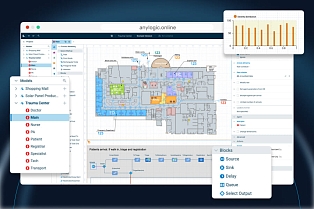
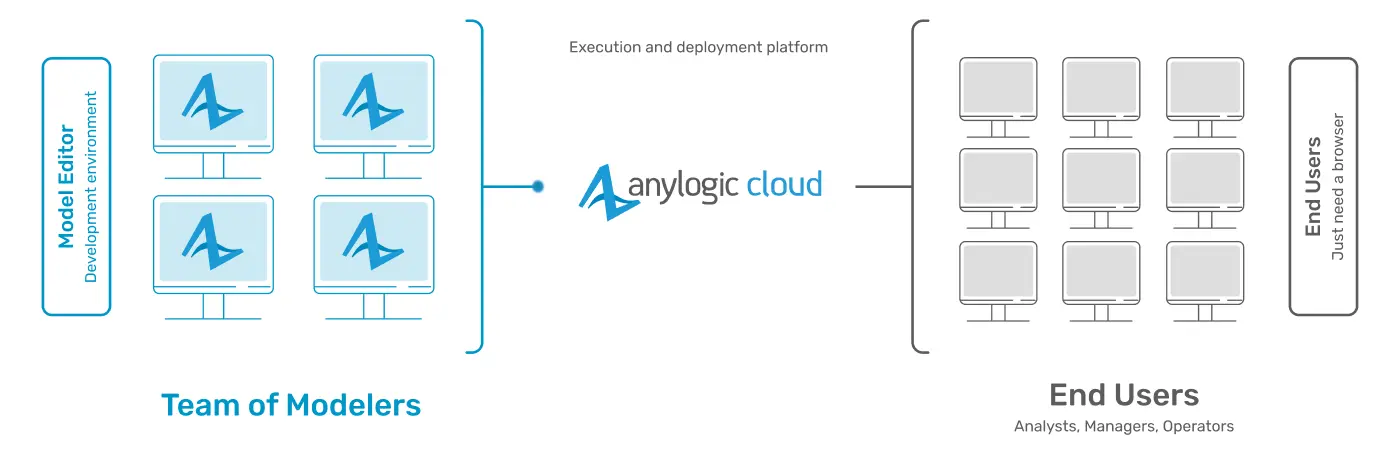
A better outcome is when stakeholders can run the model themselves. Through a web interface. With controls they understand. On servers powerful enough to handle heavy runs. And with APIs that let results flow into dashboards, workflows, or other tools.
That is when simulation stops being a one-time test and turns into a decision tool that teams use repeatedly.
The AnyLogic ecosystem addresses this through AnyLogic Cloud and Private Cloud by enabling:
- Execution of models on cloud or on-premise servers.
- Web-based access for non-technical users.
- Integration with external tools via REST, Java, and Python APIs.
- Custom user interfaces tailored to specific audiences.
This makes simulation models easy to share across teams, supporting collaboration instead of isolated, single-use analysis.
Try this: build your own digital twin
Pick any system you care about. It can be serious or silly. A coffee shop line, a pub, a warehouse, a game economy, a hospital waiting room.
Now answer three questions:
- What is the outcome you care about?
Wait time? Throughput? Cost? Failure risk? Win rate? - What actually drives that outcome?
Movement? Crowding? Scheduling? Player choices? Resource limits? - What data could keep your model honest?
Even one simple feed, like arrivals per hour or active users per day, can turn a model from interesting into useful.
That is the mindset behind the two game examples. It is also the same mindset behind industrial digital twins, where behavior simulation helps decision-makers explore outcomes before they commit.
Final thoughts: behavior simulation beyond games
A virtual plague in World of Warcraft showed how quickly human behavior can reshape an outbreak. A galactic war in Helldivers 2 showed how a player-driven system can be tracked, updated, and projected forward like a digital twin.
Underneath both examples is the same idea. Simulation is a safe place to explore ideas and understand complex interactions. It also helps reveal what emerges when lots of individual choices collide - especially when human behavior modeling and system dynamics intersect.
By modeling digital worlds with AnyLogic, we can clearly demonstrate the same principles that apply to real-world digital twins and show how behavior simulation helps organizations make more informed decisions.