Unexpected disruptions are now common for any business. A supplier delay, bottleneck, sudden demand change, logistics failure, or equipment breakdown can affect the entire organization. In complex industries, one local issue can spread across departments, suppliers, customers, etc.
According to PwC’s 2023 Global Crisis and Resilience Survey, about 90% of organizations experienced at least one unexpected disruption event in the previous years, excluding the pandemic.
For decision-makers, the key question is what happens next and how to respond. Simulation modeling helps test scenarios, compare responses, and assess risks before changes are made. But as business systems become more connected, one standalone model may not show the full picture. This is where Enterprise Simulation can help.
Contents:
- Why traditional simulation might not always be enough
- What is Enterprise Simulation?
- Enterprise Simulation as a decision-making advantage
- Airbus experience
- Why AnyLogic is the best choice
- FAQ
- Get your Enterprise Simulation demo
Why traditional simulation might not always be enough
Traditional simulation models are usually built around one process, facility, or business question. For example, a company may have a model of a production line, a warehouse, a supplier network, transportation flows, customer demand, or workforce planning.
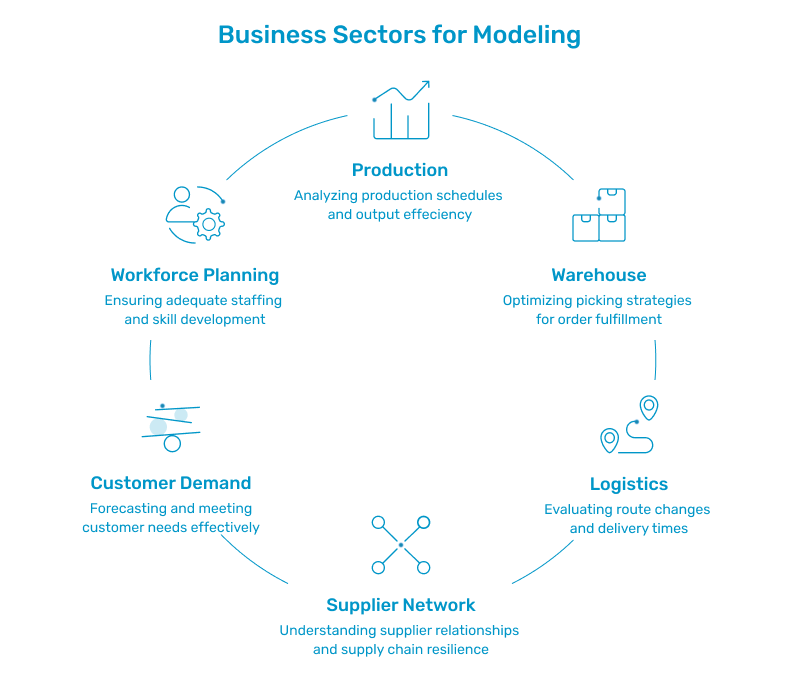
However, unexpected disruption rarely stays within the boundary of one process model. A supplier delay can affect production, warehouse capacity, transportation, and customer satisfaction.
This is the main limit of isolated simulation models. They show one area in detail but may miss how connected systems affect each other. For companies in aerospace, manufacturing, energy, healthcare, logistics, or finance, this makes responding to unexpected disruption difficult. Decision-makers need to understand both the direct impact and the effects that may appear later.
What is Enterprise Simulation?
Enterprise Simulation is an approach where several simulation models are connected to represent a larger business system. Instead of analyzing one process, such as a production line, warehouse, or supplier operation, companies can see how these parts work together.
This helps teams respond to unexpected disruption more effectively. If a supplier delay affects production, Enterprise Simulation can show how the impact may spread to logistics, assembly, delivery timelines, and customer commitments. Decision-makers can see the wider business impact and compare response strategies before acting.
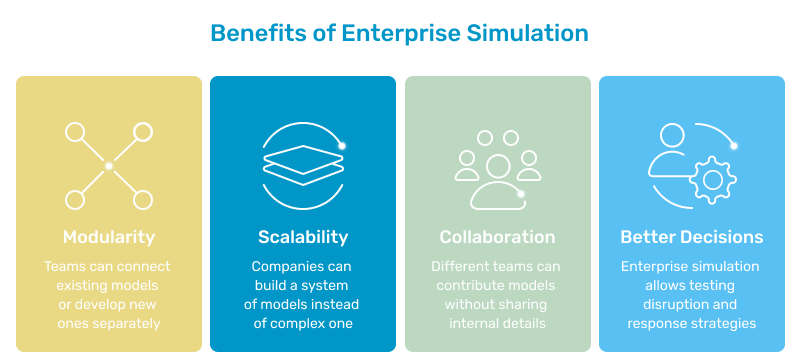
For example, what happens if a supplier suddenly loses capacity? How does this affect production schedules? Which site experiences a bottleneck first? Can another supplier reduce the impact? How much time does the company have before customer orders are affected?
These questions are hard to answer with isolated models. Enterprise Simulation makes them easier to explore.
Learn more about Enterprise Simulation.
Enterprise Simulation as a decision-making advantage
The real value of Enterprise Simulation is not only technical. It is also strategic.
During an unexpected disruption, decision-makers need to understand the whole system quickly. Separate reports, dashboards, and models may show only part of the picture. Enterprise Simulation creates a system-level view and helps teams move from isolated analysis to connected scenario testing.
With Enterprise Simulation, companies can:
- See how one decision affects other parts of the business.
- Compare different response options before acting.
- Identify trade-offs between speed, cost, capacity, and service levels.
- Understand how an unexpected disruption effect may spread across operations.
For example, increasing production at one site may help recover lost output, but it can also put pressure on transportation or warehouse capacity. Switching to another supplier may reduce one risk but create another. Connected scenario testing helps teams see these effects before making operational changes.
Airbus experience
At the AnyLogic Conference 2025, Airbus presented an AnyLogic project focused on connecting several simulation models into one larger system.
Note: In the video Airbus focuses on co-simulation; it connects several models so they can work together. In a broader business context, this is a technical part of Enterprise Simulation.
The idea is to help companies look beyond isolated processes and understand how an unexpected disruption in one area, such as a supplier delay or production issue, can affect the wider network.
The project uses a master-child architecture. One master model controls several child models, which can run independently but exchange data during the simulation.
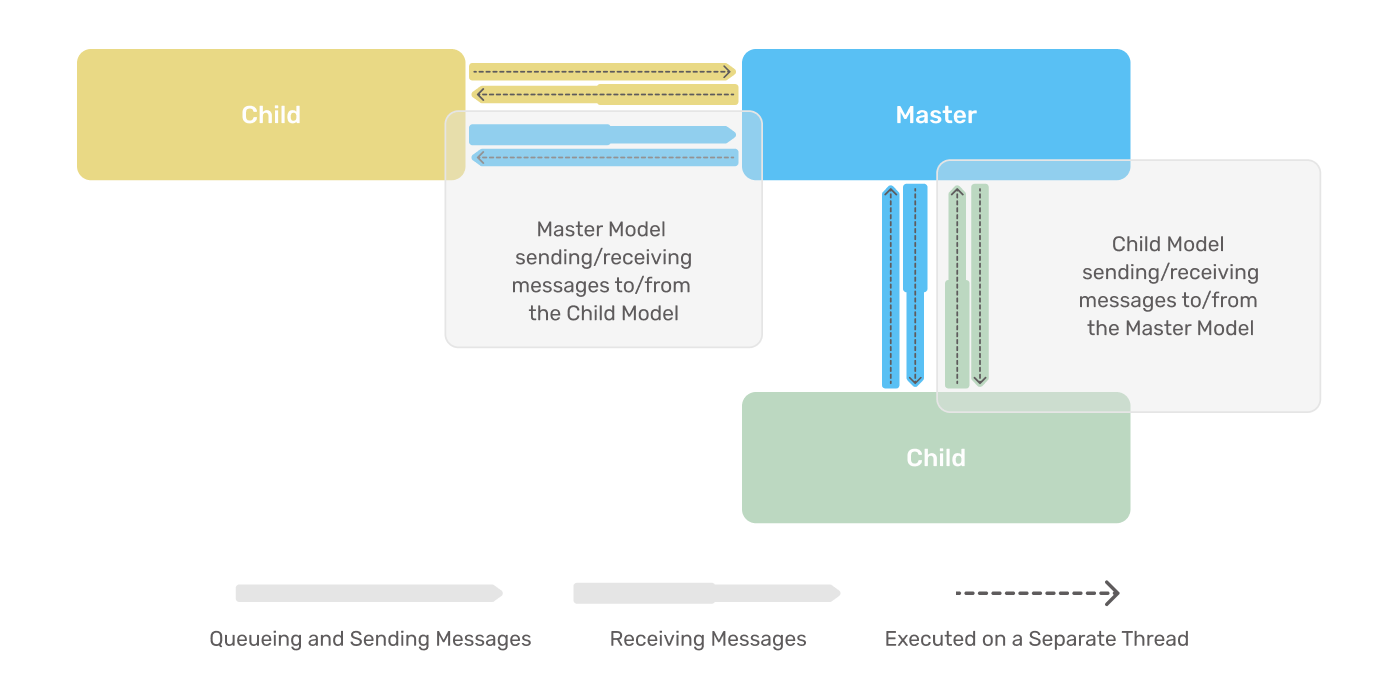
A key part of the approach is black-box modeling. It allows partners or departments to share simulation outputs without exposing confidential logic, data, or internal processes. A “black box” receives inputs, performs calculations or decisions inside, and returns outputs. Other participants can use the results, but they do not see how the model works.
Airbus presented this as useful for complex industrial ecosystems, especially where many sites, suppliers, and systems depend on each other. In the future, they want to move this toward cloud-based simulation, where connected models can run securely and use real industrial data.
From aerospace to cross-industry value
Although the example comes from aerospace, the same concept can be applied across many industries.
| Industry | How Enterprise Simulation can help | Business value |
|---|---|---|
| Energy | Models interactions between producers, grid operators, storage systems, and industrial consumers. | Helps test how changes in supply or demand affect the wider energy system. |
| Supply chain | Models supplier delays, port congestion, demand spikes, and transportation disruptions across the network. | Companies can see how an unexpected disruption affects inventory, production, delivery, and service levels. |
| Healthcare | Connects patient flow, staffing, diagnostics, hospital beds, and medical supply logistics. | Helps understand how pressure in one area affects care delivery and resource availability. |
| Manufacturing | Connects plant-level and line-level models. | Shows how local changes influence throughput, storage, maintenance, labor, and delivery performance. |
| Construction | Links the project schedule models, labor, equipment, material deliveries, and site logistics. | Helps analyze how delays, resource shortages, or delivery issues affect timelines, costs, and project execution. |
Why AnyLogic is the best choice for Enterprise Simulation
AnyLogic is a strong choice for Enterprise Simulation because it helps you model connected business systems at different levels, from detailed operations to high-level strategy.
Our multimethod approach allows teams to combine discrete-event, agent-based, and system dynamics modeling in one environment. This is useful for enterprise projects where operations, people, assets, suppliers, and feedback loops all interact.
See how simulation can help you respond to unexpected disruptions with well-developed business strategies.
AnyLogic also supports modular model development. Teams can build and test separate parts of a system, then connect them into a larger model. Because AnyLogic is Java-based, developers can extend model behavior and integrate simulations with external systems and data sources.
Another important advantage is model encapsulation. It supports black-box modeling, where departments or partners can share simulation outputs without exposing internal logic or sensitive data.
Together, these capabilities make AnyLogic suitable for Enterprise Simulation and for testing how an unexpected disruption may affect operations across the business.
Cloud-based Enterprise Simulation
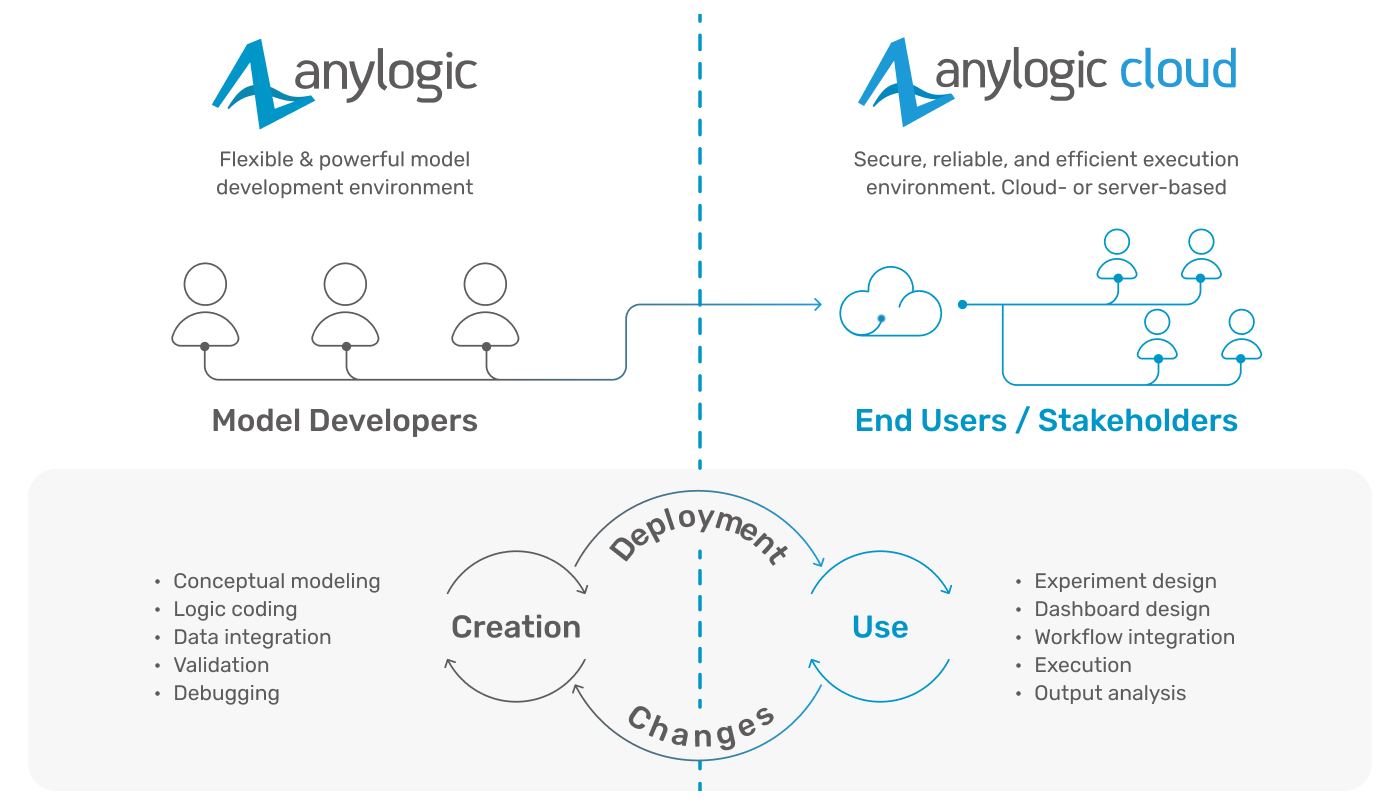
The next step for Enterprise Simulation is cloud-based collaboration with tools such as AnyLogic Cloud. Instead of relying on local models and manual file exchange, companies could connect protected models in a secure cloud environment.
For example, an aerospace manufacturer could connect its production model with supplier models to see how an unexpected disruption affects production, logistics, and final assembly.
FAQ
How can companies quickly respond to unexpected supply chain disruptions?
Companies can respond faster by testing disruption scenarios before acting. Enterprise Simulation helps show how a supplier delay may affect production, inventory, logistics, and customer commitments.
How does Enterprise Simulation help with unexpected disruption?
It shows how an unexpected disruption can spread across operations and helps teams compare response strategies before making real-world changes.
What software tools are most effective for managing operational resilience?
Simulation software, digital twins, supply chain planning tools, and risk monitoring systems can all help. AnyLogic is useful for testing how an unexpected disruption may affect connected operations.
Get your Enterprise Simulation demo
Unexpected disruptions will keep affecting complex systems. Companies respond better when they understand how their operations are connected.
With AnyLogic, you can test disruption scenarios, understand connected risks, and prepare better response strategies before problems affect real operations. Request a demo to see how AnyLogic can help your team respond to unexpected disruptions with Enterprise Simulation.