
Problem:
An American steel producer needed to synchronize batch furnace operations with a continuous casting machine. At the same time, the company was struggling to manage crane logistics, energy losses, and maintenance disruptions.
Solution:
AlsanX developed a digital twin using AnyLogic, integrating simulation, AI-powered analytics, and NVIDIA Omniverse visualization. This approach enabled real-time scenario testing, automated KPI reporting, and immersive 3D training.
Results:
- Improved synchronization between furnaces and continuous casting.
- Reduced crane and material-handling bottlenecks.
- Lowered energy consumption.
- Enabled real-time KPI reporting and faster decision-making.
- Enhanced operator training with 3D and VR environments.
Introduction: complex processes behind steel meltshops
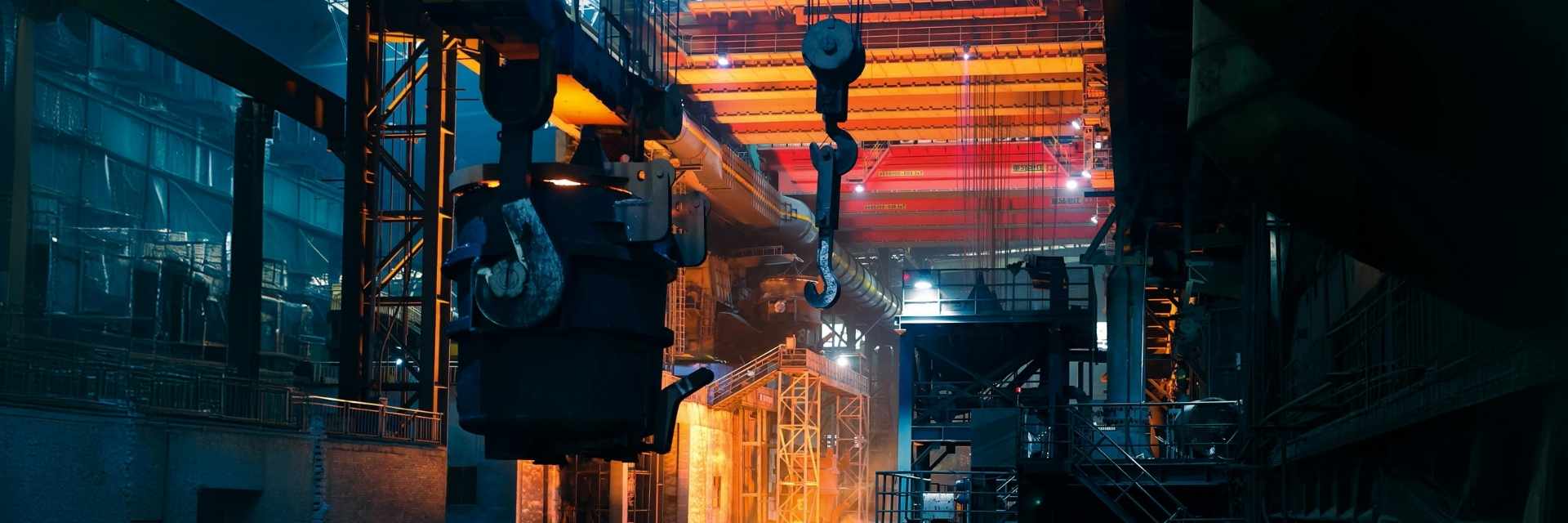
Steel production is one of the most complex and time-critical industrial processes. Multiple furnaces, cranes, and logistics systems must operate in perfect coordination. Temperature, energy, and quality constraints leave little room for error. Even small disruptions can cause serious problems across the entire meltshop, increasing costs and reducing throughput.
That is why steel producers are seeking ways to go beyond fragmented, static analysis of their operations. They are looking for solutions that support process optimization in manufacturing through real-time decision-making and automated reporting. These solutions also enable immersive training for operators, engineers, and managers alike.
Challenge: multi-stage production flow with critical bottlenecks
An American steel producer faced challenges similar to those of many other industry players. The company was trying to operate a modern meltshop while balancing complexity, efficiency, and reliability under constant constraints.
A multi-stage flow of meltshop operations was at the core of many problems that included:
- Coordination of furnace cycles with the continuous casting schedule.
- Bottlenecks in cranes and transfer systems.
- Maintenance disruptions and unexpected constraints.
- Thermal losses and high energy consumption.
- Carbon footprint mitigation.
Traditional tools handled strategic planning, scheduling, and operations separately. Unfortunately, they fell short in helping the steel producer evaluate decisions holistically in a live, risk-free environment.
Solution: steel production digital twin
The American steel producer engaged AlsanX, a consulting company specializing in innovative solutions in automation, digitalization, and smart manufacturing. They built a unified digital twin using AnyLogic. The model represented the entire meltshop, including furnaces, ladle handling, casting, cranes, and logistics, while tracking temperatures, energy use, and resource utilization.
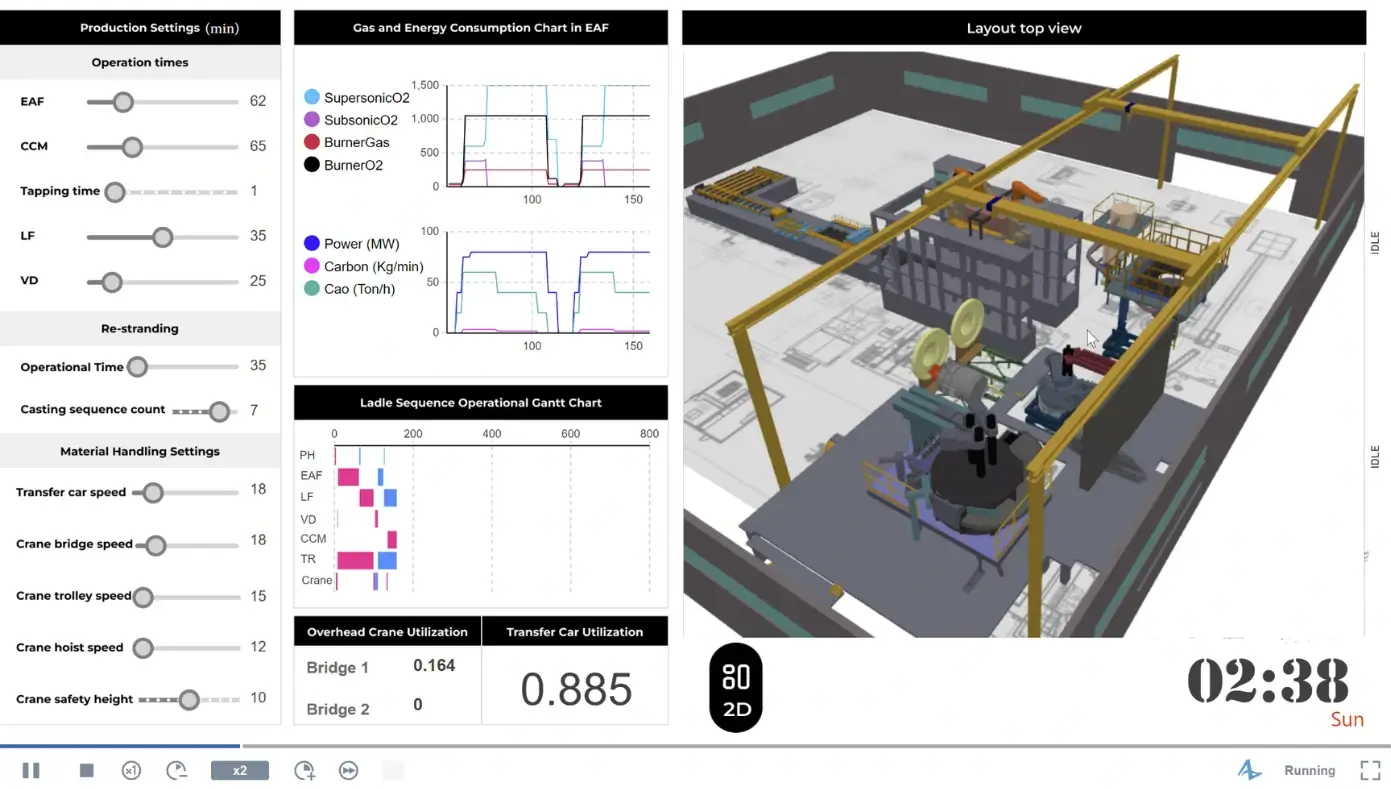
The steel production digital twin acted as a virtual testbed for process optimization in manufacturing. It allowed the team to experiment with layouts, flows, and resource allocation before committing to construction.
Unlike static models, the digital twin can receive real-time feedback from the plant. Parameters can be updated dynamically, allowing operators and engineers to test scenarios safely and see the impact immediately.
The digital twin integrated three main components:
- Simulation core to test multiple scenarios and use cases.
- 3D visualization with NVIDIA Omniverse.
- AI analytics and reporting.
Simulation core with AnyLogic
Multimethod simulation helped to model furnace cycles, ladle movements, crane operations, and casting schedules. The simulation model was built following an all-in-one approach. This way, simulation connected long-term design choices to day-to-day operations, enabling decisions across strategic, tactical, and operational levels in a single model.
To name a few of the many practical use cases, the simulation model helped:
- Test different production scenarios (from normal carbon steel to full alloy steel).
- Track temperature and optimize energy efficiency.
- Test throughput limits (of 8,800-9,000 tons per day and up to 2.79M tons per year).
- Identify crane utilization bottlenecks.
- Consider skipping skimming for certain grades.
To illustrate and explain better the underlying logic of steel plant modeling and process optimization in manufacturing, AlsanX shared an example steel plant simulation model in AnyLogic Cloud. Click and explore it yourself!
3D visualization with NVIDIA Omniverse integration
High-fidelity 3D visualization and VR capabilities allowed users to explore the plant in real time, support operator training, and evaluate scenarios in an immersive environment.
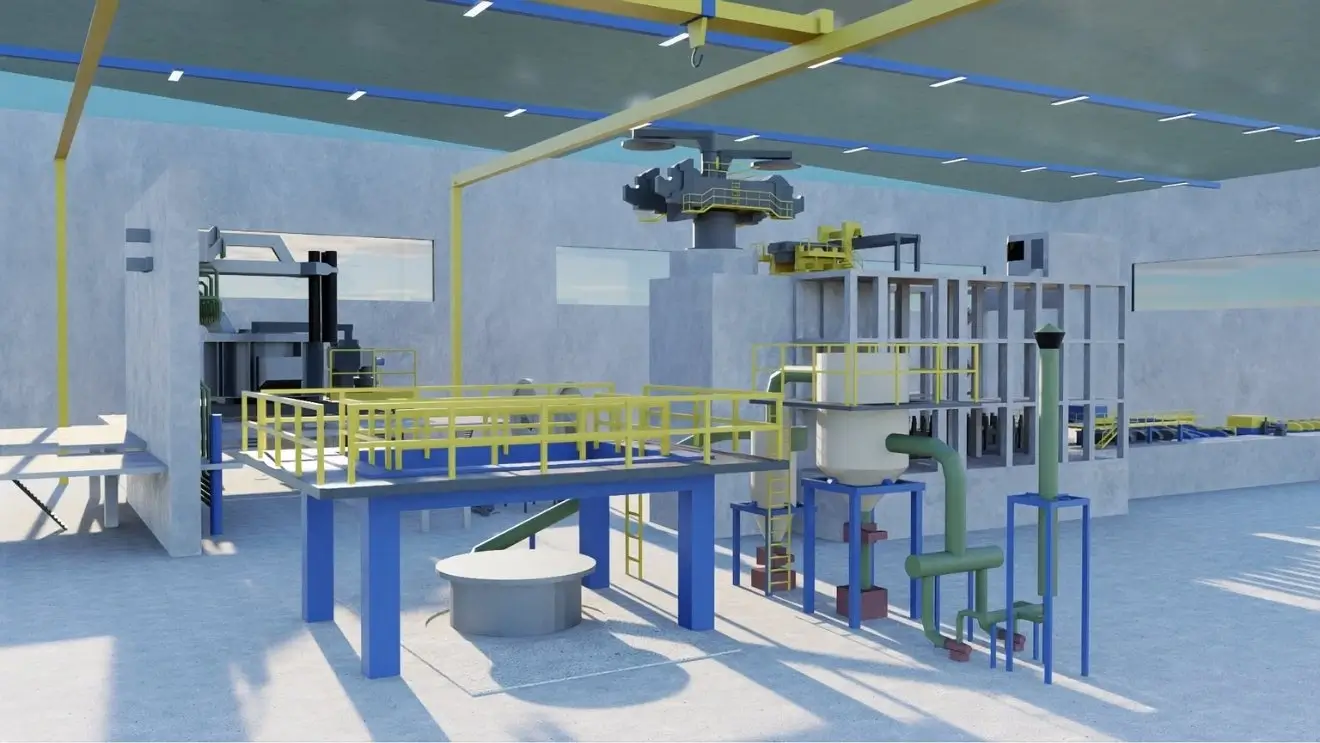
VR turned the meltshop into a safe, interactive training ground. Users were able to walk through the facility and simulate real production scenarios: workload peaks, delays, and crane conflicts.
AI analytics and reporting
A Python-based AI layer automatically calculated KPIs and produced human-readable reports with recommendations. Such reports can be generated at any time using the AI report generator. It consisted of the following:
- Input collector to gather and normalize raw simulation data (KPIs, time series).
- Performance analyzer to calculate core KPIs, detect bottlenecks, and flag performance issues.
- Chart generator to convert KPIs into clear visualizations such as heatmaps and histograms.
- AI narrative engine to transform analytical outputs into human-readable insights and executive summaries.
- Validator to ensure data accuracy and proper source referencing.
- Report renderer to assemble validated results into structured PDF reports.
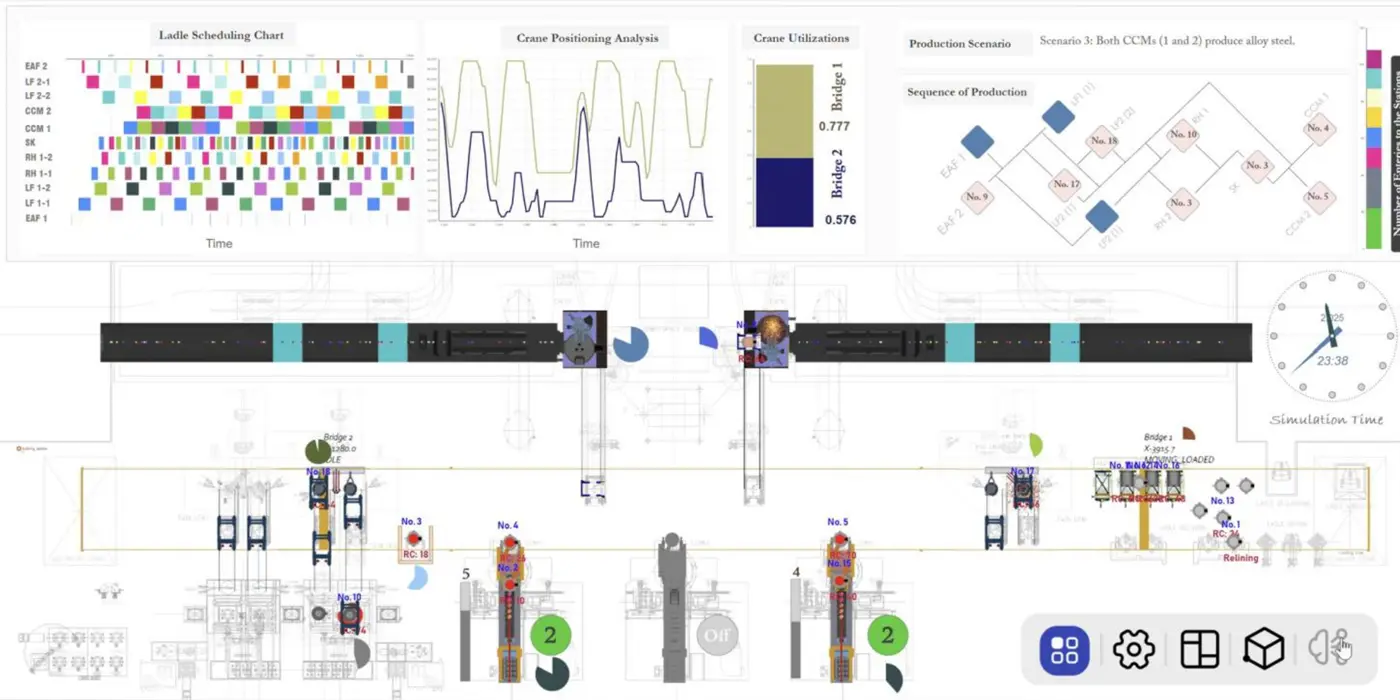
This approach transformed simulation output into clear, decision-ready insights and helped to identify bottlenecks and anomalies. The generation of structured reports and dashboards without manual effort allowed users to bridge the gap between technical simulation results and business decision-making.
Results: measurable improvements across planning and daily operations
By synchronizing furnace cycles with the continuous casting machine and optimizing material handling, the plant achieved smoother production flow and reduced energy losses. With a production digital twin in place, the crane and logistics bottlenecks were identified and mitigated, improving overall equipment utilization.
Automated AI-generated reports replaced manual analysis, allowing engineers and managers to access real-time KPIs. The simulation results also served as performance benchmarks for the physical plant, helping teams track progress toward optimal operating conditions.
In addition, immersive 3D visualization and VR training improved understanding of plant operations and accelerated operator onboarding.
The case study was presented by Salman Sangi and Hamid Tikani from AlsanX at the AnyLogic Conference 2025.
The slides are available as a PDF.