A gigafactory is big, very big. But size alone is not what makes it difficult to manage.
The real challenge is that thousands of decisions are connected. Change the production target, and you may need more machines. Add more machines, and internal logistics may slow down. Increase line speed, and quality may fall.
For companies such as Tesla, General Motors, Panasonic, LG Energy Solution, CATL, and Volkswagen, a gigafactory is more than a construction project. It is a long-term business system with high capital costs, uncertain demand, complex operations, and little room for mistakes.
Simulation modeling helps businesses explore this system before building or changing a real one. It allows teams to create a virtual factory, run different scenarios, and see how decisions could affect capacity, cost, output, risk, and time to market.
Contents:
- What is a gigafactory?
- Why businesses are interested in gigafactories
- The real challenge
- Why gigafactory businesses need AnyLogic
- FAQ
- Make expensive decisions in the model first
What is a gigafactory?
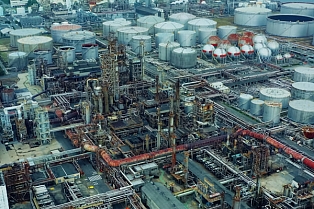
A gigafactory is a massive manufacturing facility that produces huge quantities of batteries or other clean-energy products. For example, it can make battery cells for electric cars, assemble battery packs, or produce energy storage systems. The word “giga” highlights the factory’s immense production capacity.
Tesla made the name popular when it announced its first major battery factory project in 2014. Since then, the word has become part of the industrial vocabulary.
Today, it describes factories developed by battery producers, automotive companies, and joint ventures between the two. LG Energy Solution and General Motors, for example, operate together through Ultium Cells. Panasonic has long worked with Tesla. Volkswagen, CATL, and other major companies are also building or supporting large battery production networks.
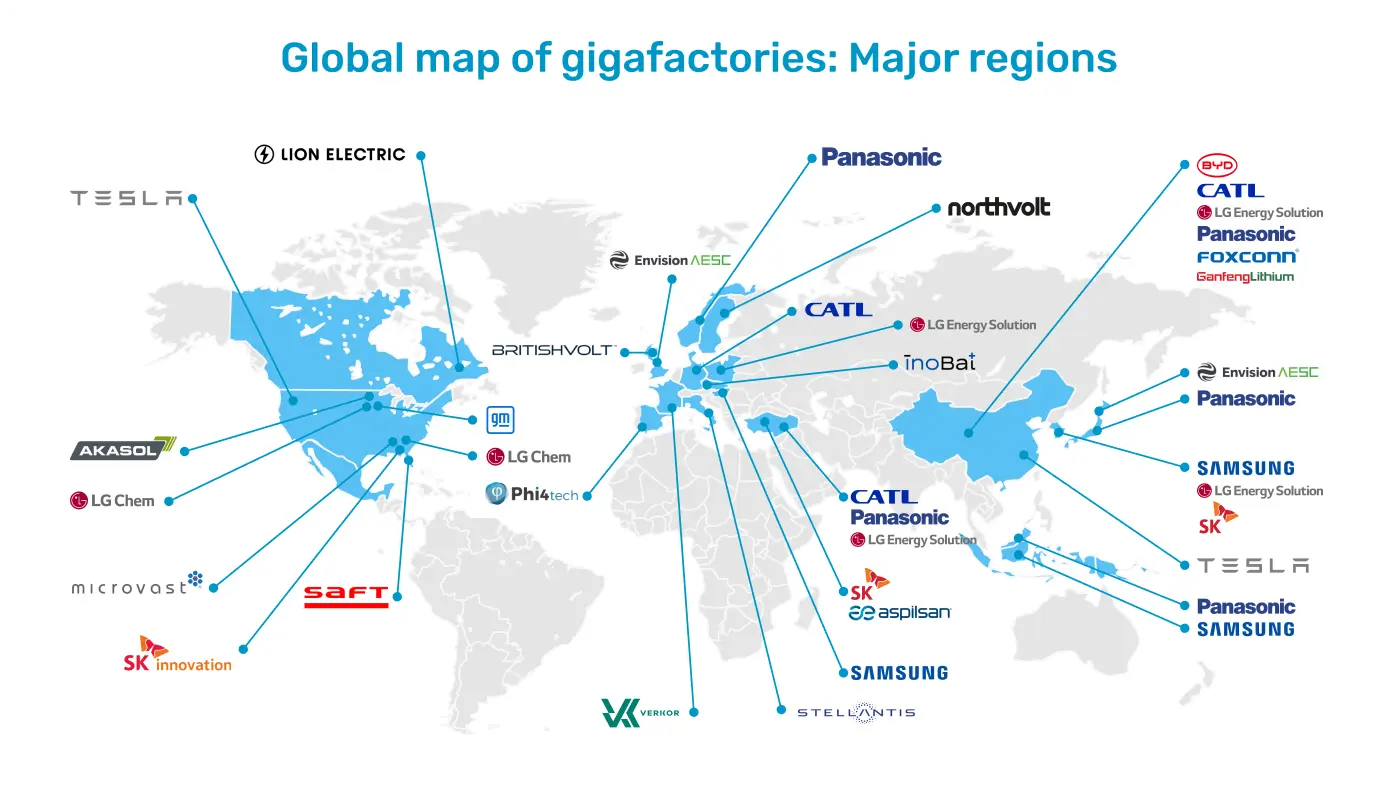
The business idea is simple: produce more batteries, reduce unit costs, and place production closer to major markets.
However, the execution is not simple at all.
Why businesses are interested in gigafactories
Battery production is no longer only a manufacturing issue. It is also about industrial strategy, access to technology, regional supply chains, employment, and economic competitiveness.
A 2021 analysis by CIC energiGUNE considered gigafactories crucial to Europe’s economic recovery and energy transition plans. Over 20 European battery-cell factory projects had been announced, with an expected annual capacity of around 600 GWh. However, this was only half of Europe’s anticipated base battery demand by 2040.
This gap highlights why gigafactory projects are more than just about increasing capacity. Companies moving to setting up a gigafactory must consider location, technology, supplier network, product strategy, workforce model, and investment path, all of which can shape their business for decades. Simulation helps test these choices before companies commit to long-term and costly decisions.
That raises a difficult question:
How can managers test the business case before the factory exists?
Simulation provides the grounds to find an answer.
The real challenge is turning capacity into output
Gigafactory announcements frequently emphasize annual capacity in GWh.
However, installed capacity does not equate to saleable output. Factors such as machine downtime, delayed material deliveries, and cell quality control failures can affect production. Furthermore, production stages may operate at varying speeds. A factory may appear impressive on paper but still fail to meet its targets.
Simulation helps connect the investment plan with the way the factory may actually perform.
Four numbers that shape the business case
For managers, gigafactory performance depends heavily on four factors:
- Ramp-up speed.
- Capacity utilization.
- Production yield.
- Flexibility.
According to the International Energy Agency, many battery plants need more than five years to reach output close to nominal capacity. Competitive production also requires yields above 90%.
This means businesses need answers to more than “How large should the factory be?”
They also need to know:
- How quickly can it become productive?
- What will limit output?
- How much good product will it deliver?
- How easily can it adapt?
With simulation you can test these questions before any changes are applied in real operations.
Why gigafactory businesses need AnyLogic
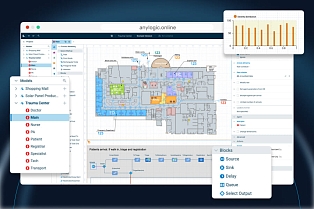
A gigafactory brings together production, quality, logistics, maintenance, energy, suppliers, and customer demand. AnyLogic helps businesses test these connected decisions before they affect real investment or real output.
Four application areas that are especially relevant.
1. Test the factory design before committing capital
A gigafactory project begins with expensive choices: equipment, layout, capacity, storage, utilities, and expansion options.
AnyLogic allows teams to compare these choices in a virtual factory first.
This approach helped GSK plan the renewal of its manufacturing facility. The simulation model was used to test more than 200 business scenarios, identify constraints, and size equipment more accurately. The selected design showed a possible 20% reduction in capital expenditure.
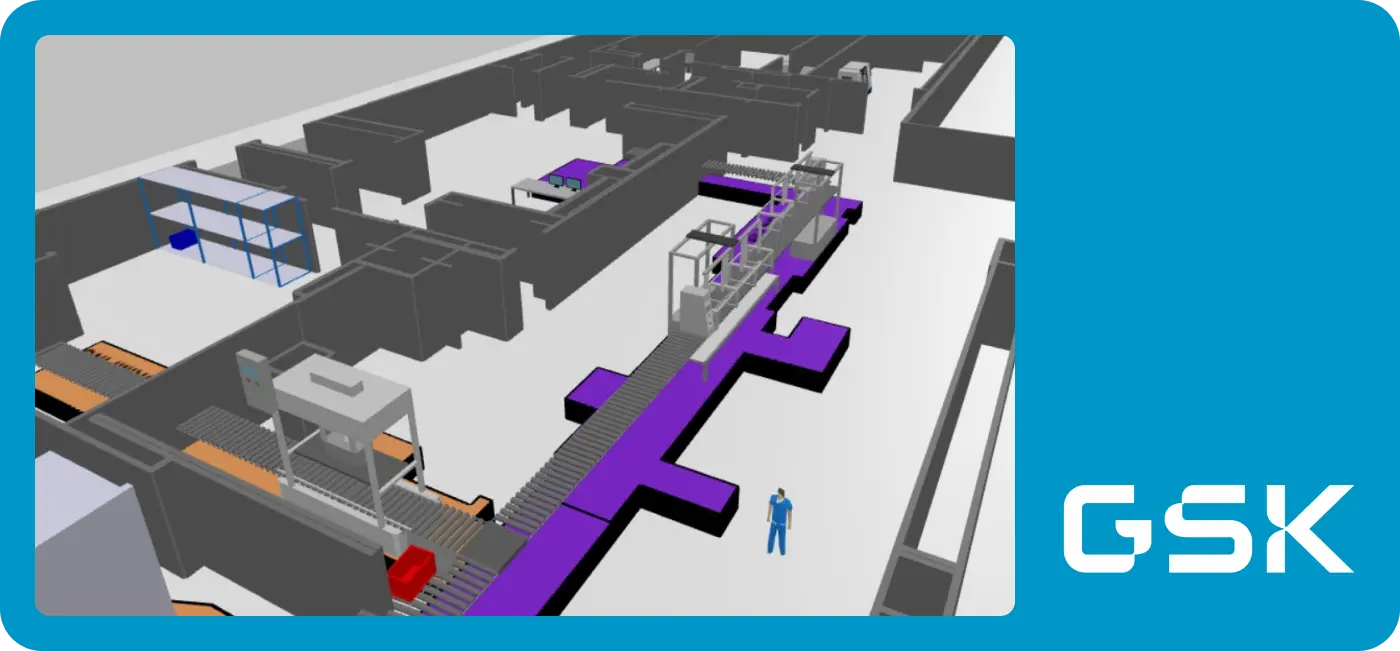
The industry is different, but the management question is the same: how much capacity is really needed, and where will investment produce value?
For a gigafactory, the model can compare alternative production lines, buffers, storage areas, material routes, and phased expansion plans. It can also show when more equipment increases output and when it simply creates unused capacity.
2. Improve production without moving the problem elsewhere
A bottleneck in a gigafactory is not always where it first appears.
One machine may seem too slow, but the real cause may be a quality check, a batch rule, limited storage, maintenance, or late material delivery.
GE used an AnyLogic model of a complete manufacturing plant to examine production flow, cycle times, yield, breakdowns, staffing, and equipment setups. The model supported capacity planning, bottleneck analysis, and daily operational decisions. GE could run scenarios such as whether another operator would be needed during the next eight hours. The project improved visibility into operations and supported higher throughput and lower manufacturing costs.
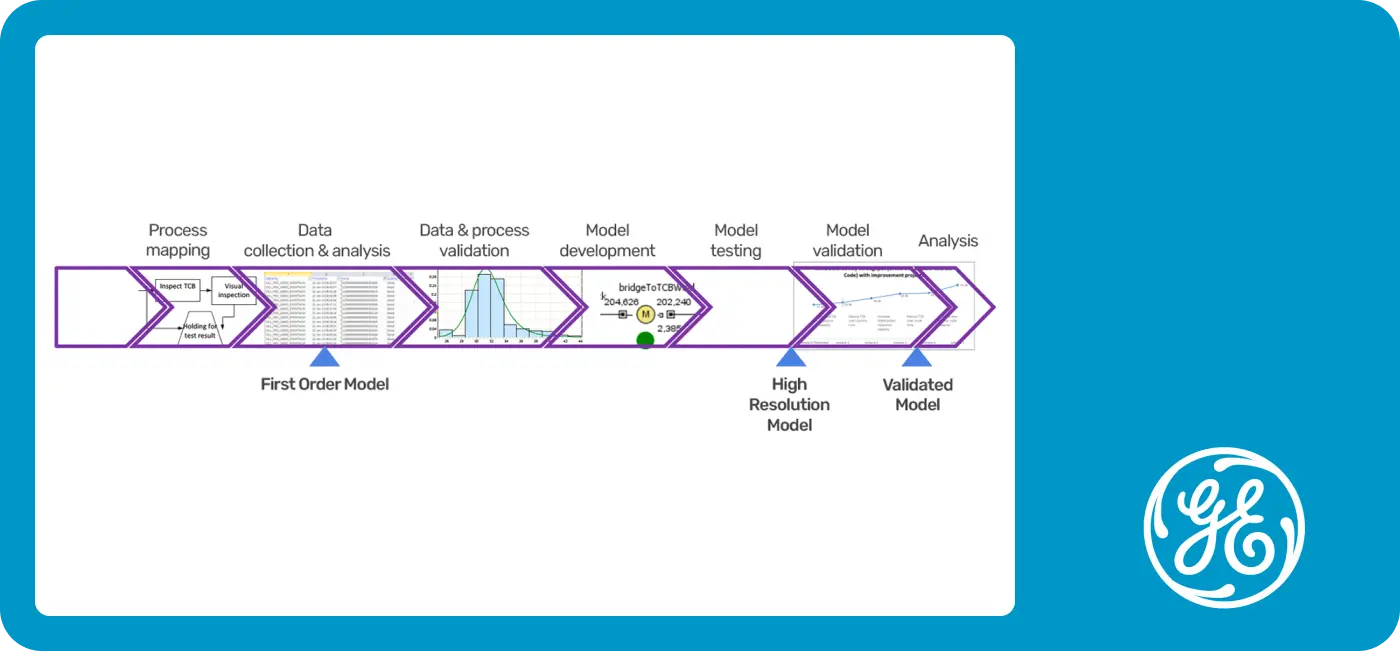
A gigafactory can use the same approach during ramp-up and stable production. Teams can test changes to line speed, staffing, maintenance, buffers, and scheduling before interrupting the real operation.
This matters because a faster process does not always create better output. Sometimes it only creates a faster queue.
3. Design internal logistics for real production conditions
Battery production depends on constant movement between production stages. Parts, cells, packs, pallets, and work in progress must reach the correct station at the correct time.
AnyLogic can represent this movement together with the production system.
In a battery assembly study developed with VDL Nedcar, researchers used AnyLogic to compare automated guided vehicles and autonomous mobile robots in a high-mix production environment. The model captured the interaction between assembly, parts delivery, and subassembly transport.

This is directly relevant to gigafactory planning.
Before buying a fleet, businesses can test how many vehicles are needed, which routes they should follow, where congestion may appear, and how charging rules affect availability.
The same model can reveal whether a logistics problem will leave expensive equipment waiting for materials. It is better to discover this while the vehicles are still virtual.
4. Move from one factory model to enterprise simulation
Sometimes a local decision at one facility can affect processes across the whole organization. This is where AnyLogic Enterprise Simulation becomes important.
Enterprise Simulation uses deployed and potentially connected simulation-based digital twins across the business. A factory model can support production managers, while connected models support supply chain teams, regional planners, and executives.
AnyLogic cases show how this can develop in practice.
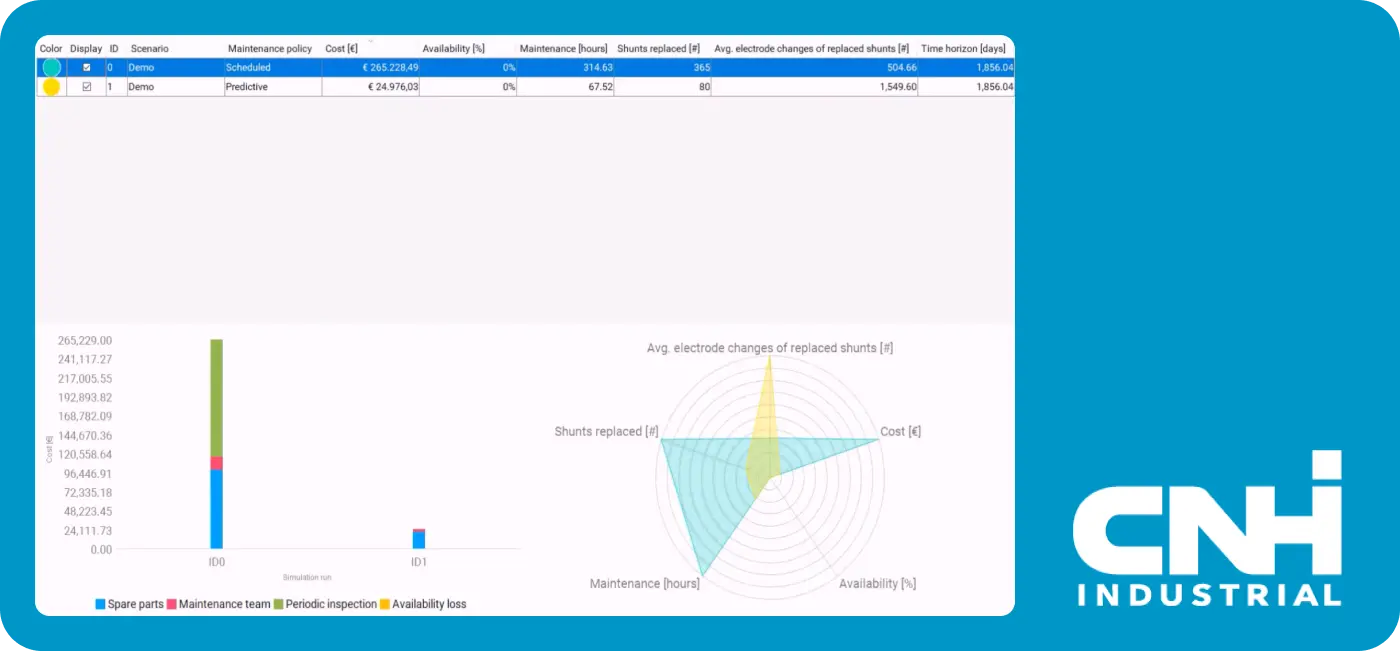
CNH Industrial used a manufacturing-line digital twin to support maintenance decisions in an automotive production environment. The model connected the physical line with a virtual representation that could be used to study its behavior and evaluate maintenance strategies.
Siemens and Decision Lab developed ATOM, a digital twin of global gas-turbine maintenance operations. The model used live supply chain data and represented a network of assets, repair facilities, and operational decisions rather than one isolated process.
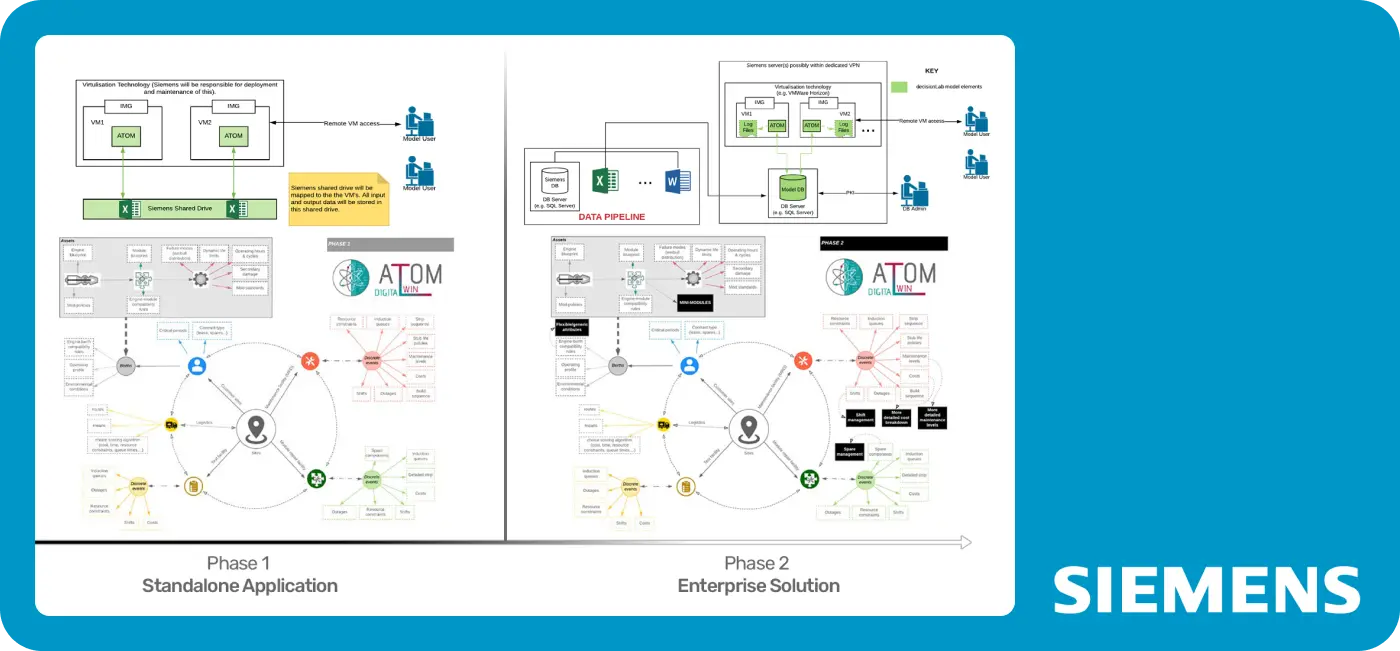
For a gigafactory business, the same principle can connect:
- Production and internal logistics.
- Maintenance and workforce planning.
- Factories and suppliers.
- Capacity across several regions.
- Operational decisions with long-term expansion plans.
A plant manager could test tomorrow’s schedule. A supply chain team could examine a supplier disruption. An executive team could compare expansion across several sites.
That is the main difference between a one-time simulation project and Enterprise Simulation. The first answers one question. The second makes simulation part of how the business runs.
Read about Airbus insights for implementing Enterprise Simulation techniques to manage unexpected business disruptions.
FAQs
What is a gigafactory, and why are companies building them?
A gigafactory is a large-scale manufacturing facility that produces batteries, battery cells, battery packs, or other clean-energy products at very high volumes. Companies build gigafactories to increase production capacity, reduce costs through economies of scale, and meet growing demand for electric vehicles and energy storage systems. They also help strengthen supply chains by bringing production closer to customers and key markets.
Why are gigafactories important for electric vehicles?
Gigafactories help reduce battery costs through economies of scale, increase production capacity, and shorten supply chains. This allows automotive manufacturers to produce more electric vehicles while lowering per-unit costs.
How does simulation help improve gigafactory performance?
Simulation allows companies to build a virtual representation of a gigafactory and test different scenarios before making real-world changes. Teams can evaluate production capacity, bottlenecks, logistics flows, staffing levels, maintenance strategies, and expansion plans without disrupting operations.
Make expensive decisions in the model first
For companies entering the gigafactory market, AnyLogic can support factory design, capacity planning, and investment decisions. For companies already operating gigafactories, it can help improve ramp-up, production flow, internal logistics, and daily operations.
Enterprise Simulation extends this value across facilities and business functions.
A gigafactory is a costly place to discover that a decision does not work. AnyLogic provides a safer place to test it first.
Want to know more about how AnyLogic can help your business get to the next level? Simply fill in the form and we’ll arrange a private demo for you.