The new AnyLogic 8.9.6 and 8.9.7 have introduced several useful features that simplify the way models are created and configured. These improvements are designed for a wide range of users and make everyday modeling tasks faster and more convenient. Let’s take a look at what has been added.
Contents:
- Chart creation wizard
- New 3D preview mode
- Templates for faster setup
- Omniverse and animation updates
- Creating markup using external Python scripting
- Road Traffic Library improvements
- Upgrade to AnyLogic 8.9.7
Chart creation wizard
Charts are an essential part of analyzing simulation results. While the Analysis palette allows you to build any chart manually, it can take time to configure them and connect all required data sources. To simplify this for the most commonly used statistics, version 8.9.6 introduced a Chart creation wizard.
Now, this chart creation wizard can be launched directly from markup elements or flowchart blocks in the Process Modeling, Material Handling, Pedestrian, Road Traffic, and Rail libraries.
When launched, the wizard automatically identifies the statistics that can be collected for the selected object using the AnyLogic Java API. For example, if you open the wizard from a robot markup element, it will suggest data such as time in state and utilization, because these values are available through functions like getTimeInState() and utilization().
Chart creation wizard
The wizard also chooses a suitable chart type by default and allows you to remove any datasets you do not need. After clicking Create, the chart is added to the model with all properties already filled in, including the correct API calls required to retrieve the statistics during the simulation.
New 3D preview mode
Creating large models of spacious facilities often requires significant effort, especially when building a clear and representative 3D scene. Users frequently assemble sophisticated objects, such as custom equipment or stations, from graphical primitives.
Arranging these primitives correctly in 3D can be difficult when working only in the 2D graphical editor.
To simplify this process, the new update introduces a 3D preview. This is available from the View menu and lets you see how the 3D scene will look at runtime while you are still editing the model, without starting the simulation.
3D preview mode
With 3D preview, you can:
- Check whether objects are placed correctly based on their Z coordinate.
- Verify rotations and overall positioning.
- Adjust the camera view in the same way as in the 3D scene of a running model.
- Click an object in either 2D or 3D and see it highlighted in both views to quickly find the corresponding representation in the other view.
- Navigate directly to a component using double-click, which is especially useful in large scenes with many details that can be easy to miss.
This makes it easier to put together accurate 3D scenes without the usual back-and-forth between edits and test runs.
Templates for faster setup
Another feature that speeds up model creation in version 8.9.7 is the ability to use templates. Templates allow you to save a set of parameter values for any object, such as a markup element, flowchart block, or control. Once saved, the template appears in the library palette and can be reused whenever you need an object with the same configuration.
Templates for faster setup
A common use case is building a conveyor network where several conveyors share identical characteristics, for example:
- Speed.
- Acceleration.
- Distance between agents.
- Other operational parameters.
After configuring the first conveyor, you can save its settings as a template by using the Save as template command in the conveyor’s context menu and selecting which parameters should be stored. The template is then added automatically to the Material Handling Library.
Once created, the template can be:
- Dragged onto the canvas as a ready-to-use element.
- Placed through draw mode to create new conveyors with the stored parameter values.
Templates can also be applied to elements that are already on the canvas. In this case:
- The object’s parameters are updated to match the template.
- Only the parameters included in the template are changed.
- All other parameters remain unchanged.
It becomes much easier to keep everything consistent in bigger models without having to repeat the same configuration work. You can also create multiple templates for a single element when different configurations are needed.
Omniverse and animation updates
Since the NVIDIA Omniverse Nucleus workstation used by the Omniverse connector was deprecated in October 2025, AnyLogic now supports using the connector as an extension for Omniverse Kit Apps. The extension file is available through the link in the Omniverse connector element.
To use the updated connector, you can:
- Add the extension to Omniverse Composer.
- Enable it in the extension properties.
- Add the Omniverse connector panel to the Composer interface.
After that, the connector works the same way as before, linking a running AnyLogic model with a USD scene in Omniverse Composer.
NVIDIA Omniverse extension
Another improvement is the ability to store rendered USD scenes locally, not only on a Nucleus server. The previous Nucleus-based connector is still available as well and can be used with the Nucleus Server included for Linux Enterprise users who have an active Nvidia Omniverse Composer subscription.
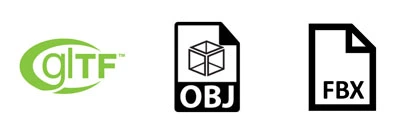
Along with simplifying the connection to external graphical tools, we also improved animation support inside AnyLogic itself. Starting from version 8.9.7, you can import additional 3D formats. In addition to Collada (.dae), the software now supports glTF, obj, and fbx.
Creating markup using external Python scripting
Building spacious networks can be a time-consuming task. AnyLogic has long supported creating and configuring markup elements through the Java API, but those elements appear only at runtime. This made debugging and adjusting automatically generated markup more difficult.
To address this, version 8.9.7 introduces a new way to create networks programmatically: generating markup directly during model design time using external Python scripting.
Markup created this way appears directly on the canvas during design time, meaning it can still be edited or adjusted at any point.
Creating markup using external Python scripting
AnyLogic provides Python modules that include functions for:
- Connecting to an open model.
- Creating markup elements.
- Setting their parameters.
These modules are available in the AnyLogic installation folder or can be installed through the standard pip package manager from the official Python directory.
Users can call these functions in their own external scripts and combine them with reading data from external sources, such as files or database tables.
Starting from version 8.9.7, to receive commands from an external Python script, click the button in the tools ribbon to switch AnyLogic into the required mode.
Road Traffic Library – lane selection
The new update adds improvements to the Road Traffic Library that give users more control over how vehicles choose their lanes. This is especially useful when modeling different vehicle types that must follow specific lanes, for example:
- An ambulance driving in the lane closest to the median.
- Trucks staying in the lane near the road edge.
- Vehicles that must follow a designated lane when passing through checkpoints or terminals.

Lane behavior can be controlled in several ways:
- Use the Lane selection policy in the CarSource block to specify which lane a vehicle should take when it enters the road network.
- Change this policy at any point when the vehicle enters a CarMoveTo block by selecting the Change lane selection policy option.
A new function, setPreferredLane(), can force a vehicle already moving in a CarMoveTo block to change lanes immediately. This is useful for modeling situations such as overtaking, road works, or temporary lane restrictions.

A better way to build your models
Together, the changes in 8.9.6 and 8.9.7 smooth out many routine parts of model building. Charts are quicker to set up, 3D scenes are easier to adjust, templates save time, and animation and scripting tools offer more flexibility. Traffic modeling also gets a useful upgrade.
You can find the full list of updates in the release notes. If you want to see how these improvements feel in practice, download the newest AnyLogic version and give it a try.