
A video full of AnyLogic tips and tricks to get the most from the simulation modeling software.
Benjamin Schumann shares his expertise in using AnyLogic to help users develop simulation models effectively and efficiently.

Just eighteen years from now, 7.8 billion passengers will be taking to the skies annually.
How best to increase passenger capacity at airports? Airport simulation is an important tool for testing, development, and operational management. Here we look at several real-world examples of simulation working for airports...

Get inside the model! In this post, we will look at the technical features of the example Border Checkpoint model: what it consists of, how it works, and what methods were used in its development.
Learn tips and tricks as you go through the model step by step with our expert...

New releases of AnyLogic come with new example models. These help newcomers understand simulations and experienced users to learn about AnyLogic’s advanced capabilities.
New to AnyLogic is our Border Checkpoint model. It is based on the same principles as classical queueing systems, such as those found in banks, shops, and medical centers.
In this post, we show how to model and analyze a variety of these business problems using the new border crossing model.
As airport security checkpoints become progressively rigorous, passengers experience longer wait times. Although passenger safety is most important, airports also work to minimize wait times at security check points to increase customer satisfaction.
Martin Jung, Axel B. Classen, and Florian Rudolph from the German Aerospace Center recently analyzed wait times and throughput at the security

To increase profit, airlines seek to minimize turnaround time. Turnaround time is attributed to multiple factors, disembarkation, baggage unloading, refueling, cargo unloading, aircraft maintenance, cargo and baggage loading and passenger boarding. A group in the Science and Engineering Faculty at Queensland University of Technology in Brisbane, Australia completed a project using AnyLogic software to investigate the turnaround time for aircraft passenger boarding using AnyLogic simulation software. The recently published paper studied seven common boarding strategies and two new suggested strategies to find the optimal boarding methods for a Boeing 777 and Airbus 380. They considered behavior of groups traveling together, and individuals storing luggage as part of the simulation model.

In the wake of a disaster, natural or otherwise, a power outage can cause residual damage and hardships. To reduce the length of power outages, utility companies often have mutual aid agreements in place. Mutual aid agreements provide a mechanism to acquire emergency assistance quickly in the form of materials, equipment, personnel and other relevant services. There are many factors that drive the deployment of assistance during a disaster (i.e. distance, urgency, cost, extent of damage, etc.) To help utility companies make better, faster decisions, York University applied simulation modeling with AnyLogic software to manage the process of mutual assistance. Learn more via the case study or recorded presentations from AnyLogic Conference 2015.
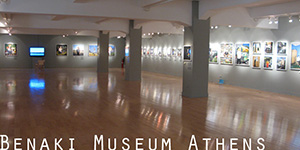
The setup, or staging of an art exhibition requires significant time, collaboration, and conceptualization. The Ametria project completed by Luigi Manca and Roberto Grugni, Partners at Fair Dynamics Consulting in Milan, Italy deals with the staging of a contemporary art exhibition held at the Athens’ Benaki Museum. The general purpose of the exhibition was to set-up something original and astonishing, a maze-like area able to affect visitor’s mood, steering their feelings to create an entirely personal experience.

AnyLogic, utilized for active shooter scenario research by Adam Kirby, Ph D Student, and Dr. J. Eric Dietz, Professor at the Purdue Homeland Security Institute (PHSI), was showcased for the second time on WLFI - News 18 last Friday. Adam Kirby and Professor Dietz are using their work to encourage people to think scientifically versus emotionally when debating gun control. Watch the news clips.

To continue on the topic of pedestrian modeling: recently, I heard the news that the new terminal being built in the St. Petersburg airport will be tested using a free labor force, or in other words, volunteers. Actually, the volunteers will test the terminal’s operations and on-ground facilities by acting like passengers. It was interesting to find that the London Heathrow and Dubai airports are using this practice right now too. Here in St. Pete, they gathered more than 5,000 volunteers, to come to the terminal and walk around, jostle to check-in desks, race up the down-moving escalators, get bored in queues to passport controls, etc. I suspect that the volunteers will be watched by engineers, who will be counting the number of injuries per minute. That’s how airport authorities are going to see if everything is OK with the terminal.